



























As Western Australia (WA) looks towards 2026, the mining industry faces a mix of challenges and opportunities across key sectors, including iron ore, gold, rare earths, and lithium. Following a year characterized by unexpected market resilience, predictions indicate significant shifts ahead for these essential commodities.
Iron Ore Outlook
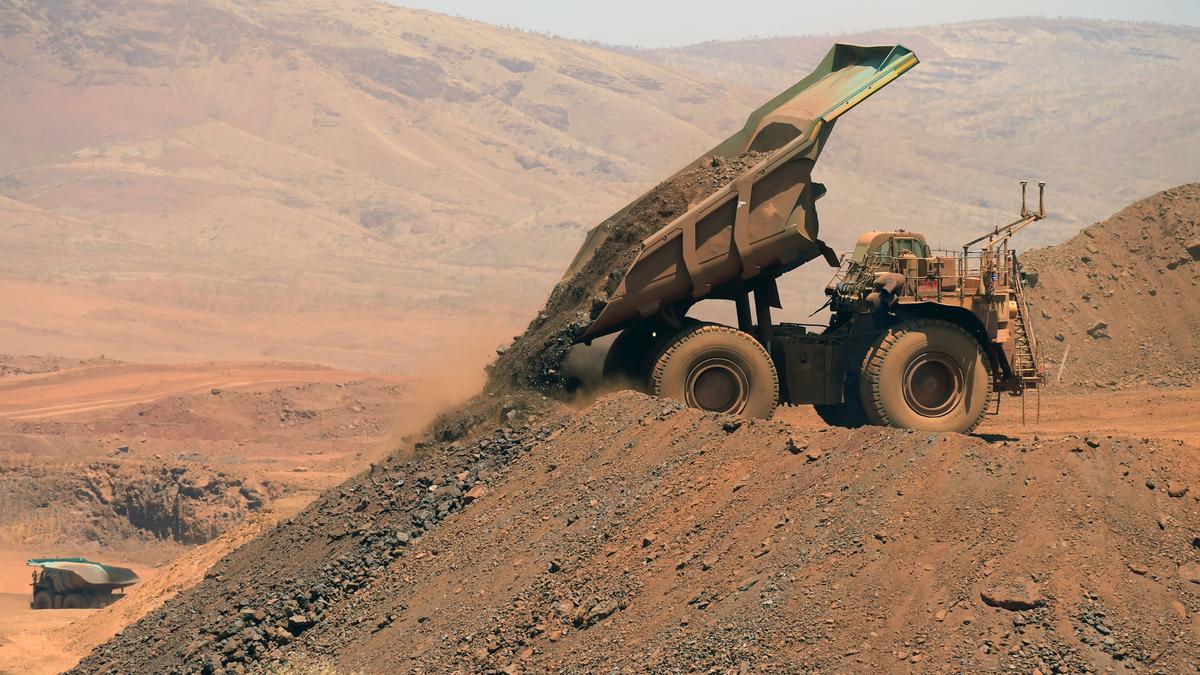
Iron ore remains the backbone of WA’s mining sector, generating over $100 billion in annual export income and contributing more than $8.5 billion in royalties to the state. Despite earlier forecasts predicting a drop in prices to around $US80 per tonne, iron ore consistently defied expectations throughout 2025, averaging $US103 per tonne. Currently, it trades at approximately $US104 per tonne, delivering substantial budget windfalls for both state and federal governments.
Economists and financial analysts, however, remain cautious, asserting that iron ore prices will likely fall below $US100 per tonne in 2026. Factors contributing to this outlook include the recent export of maiden iron ore from the Simandou mine in West Africa, which is expected to add considerable supply to the global market. Additionally, China, the largest consumer of iron ore, appears to be experiencing economic slowdowns that may further dampen demand. A prolonged contract dispute between BHP and Chinese buyers, who are seeking greater discounts, adds to the potential downward pressure on prices.
Gold Market Performance
In stark contrast, the gold market has enjoyed a remarkable year, with prices soaring to record levels. In March, the price of gold surpassed $US3000 per ounce for the first time, eventually reaching over $4450 per ounce. Analysts predict that the price may breach the $US5000 mark in the coming year, driven by geopolitical tensions and economic uncertainties.
Factors such as US President Donald Trump’s policies and the prospect of military intervention in Venezuela have heightened demand for gold as a safe-haven asset. According to Kenneth Wan, portfolio manager at Drummond Knight Asset Management, “Bull markets for gold have historically run for about five to seven years. We’re currently only about three years into the current bull market.” Even if gold prices were to decline by $1000 per ounce, WA’s gold miners are well-positioned to remain profitable, although gold royalties contribute less to the state’s finances compared to iron ore.
Rare Earths and Geopolitical Implications
Rare earth elements have taken center stage in 2025 due to their critical applications in military technology and manufacturing. With China controlling a significant portion of the global supply chain, the United States and Australia have forged a multi-billion-dollar pact aimed at developing rare earth mines and refineries, primarily in Australia. This initiative seeks to reduce dependence on Chinese supplies amid escalating trade tensions.
Investment in ASX-listed companies focused on rare earths has surged, yet significant challenges lie ahead. The mining and refining equipment needed to establish these facilities is primarily sourced from China, raising concerns about access and pricing. Industry experts anticipate potential cost overruns for rare earth projects, complicating efforts to establish a reliable supply chain.
Volatility in Lithium Prices
The lithium market has experienced dramatic fluctuations throughout 2025. Prices for spodumene concentrate began the year around $US820 per tonne, dipped below $US600 per tonne by June, and rebounded to exceed $US1200 per tonne by year-end. Analysts indicate that a price point of around $US1000 per tonne is essential for profitability across WA’s lithium sector.
The price surge in the latter half of the year can be attributed to stricter regulatory measures in China, which led to the revocation of numerous lithium mining permits, coupled with robust demand for lithium in energy storage technologies like the Tesla Powerwall. Looking ahead, uncertainty looms as analysts debate whether an increase in Chinese lithium production will outpace rising demand in 2026, signaling yet another turbulent year for this critical battery metal.
As WA navigates these evolving trends, the state’s mining industry will need to adapt to the shifting landscape, balancing the opportunities presented by soaring gold prices and strategic rare earth developments against the potential downturns in iron ore and lithium markets.