











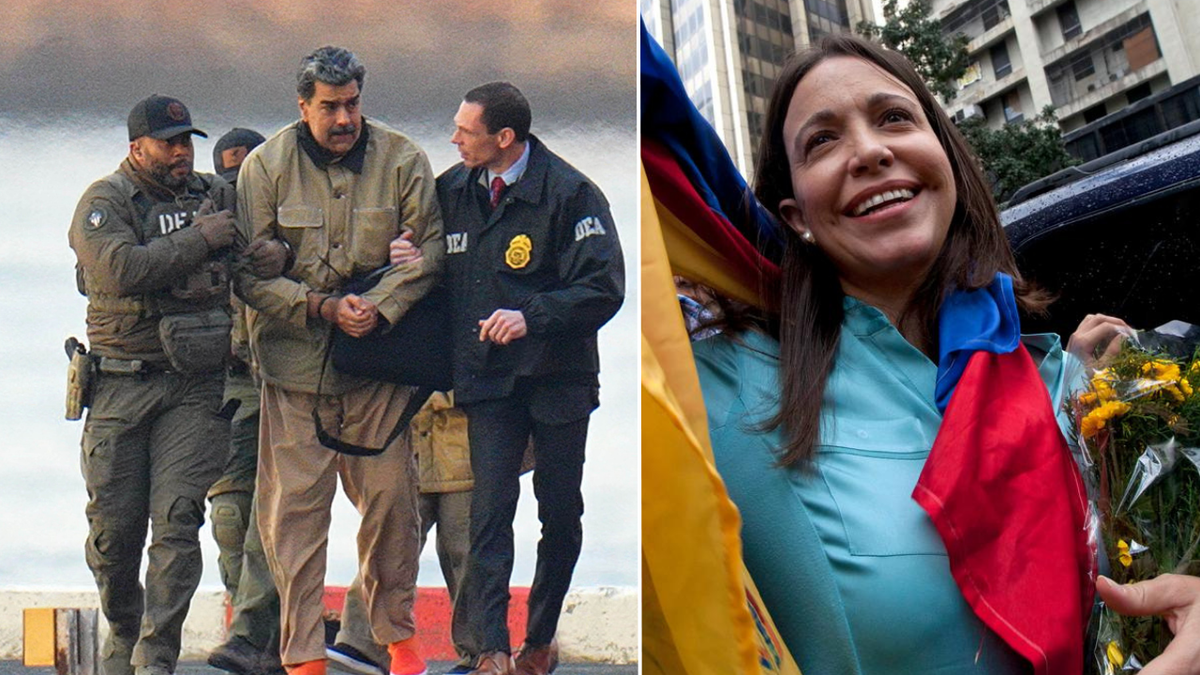
Maria Corina Machado, the prominent leader of Venezuela’s opposition, has announced her intention to return to her home country, expressing confidence in her movement’s ability to secure a legitimate electoral victory. Machado, who fled Venezuela in October to receive the Nobel Peace Prize, dedicated the award to Donald Trump, praising his role in countering the regime of Nicolas Maduro.
In an interview with Fox News, Machado stated, “I’m planning to go back to Venezuela as soon as possible.” She emphasized that her movement is prepared for upcoming elections, asserting, “We won an election in 2024 by a landslide under fraudulent conditions. In free and fair elections, we will win over 90 percent of the votes.” This claim follows a contentious election in which Machado was barred from participating, a situation that many opposition activists and international observers have decried as unjust.
Machado’s return plans come at a time when Maduro faces significant legal challenges. He recently pleaded not guilty to narcotics charges in a Manhattan court, claiming he remains the legitimate president of Venezuela. His wife, Cilia Flores, also captured, pleaded innocent to related charges. The couple is scheduled to appear in court again on March 17, 2024.
While Machado has not disclosed her current location or specific plans for her return, she acknowledged the risks involved. Venezuelan authorities have issued a warrant for her arrest, and Maduro’s loyalists remain entrenched in power. “We have to fix the country first. You can’t have an election. There’s no way the people could even vote,” Trump remarked in response to the political situation in Venezuela, emphasizing that the U.S. must address critical issues before any elections can take place.
Machado criticized the U.S. administration’s potential cooperation with Maduro’s interim ally, Delcy Rodriguez, who has denounced Maduro’s recent capture by U.S. forces. She described Rodriguez as a “corrupt narco-trafficker” aligned with countries like China, Russia, and Iran, asserting that she is untrustworthy for potential investors looking to enter Venezuela’s market.
Despite some opposition from activists and the Venezuelan diaspora, Machado has praised Trump’s actions, suggesting that January 3 would be remembered as a significant day in the fight against tyranny. She has expressed her belief that Venezuela, given its vast oil reserves, could become a leading energy hub in the Americas if proper governance is restored, claiming that this would facilitate the return of exiles.
The political landscape in Venezuela remains volatile. With Maduro’s administration facing international condemnation, particularly from nations like Russia and China, the potential for further U.S. intervention raises concerns. Legal experts have questioned the legitimacy of the U.S.’s actions, suggesting they may violate international laws.
As the situation unfolds, the future of Venezuela hangs in the balance. Machado’s resolve to return home signals her commitment to opposing the current regime, while the international community watches closely to see how events will develop in the coming months.