


































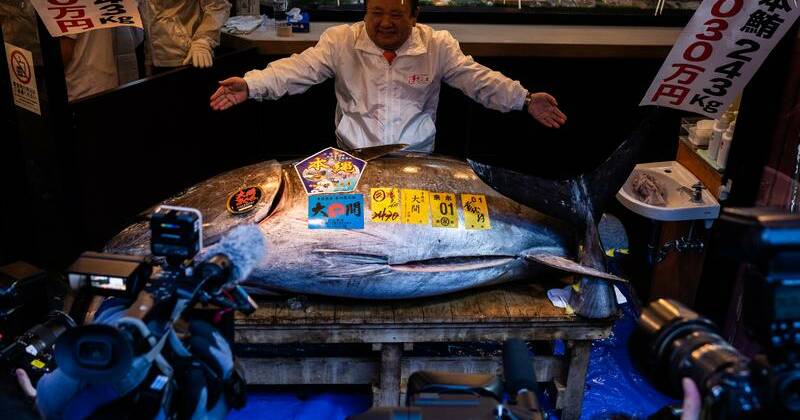
A Japanese sushi restaurant has made headlines by paying a record-breaking 510 million yen (approximately $4.9 million) for a single bluefin tuna at the annual New Year auction held at Tokyo’s Toyosu fish market. This staggering bid not only marks the highest price ever paid for tuna at this event but also surpasses the previous record set by the same company in 2019.
The prized tuna, weighing 243 kilograms, was acquired by Kiyomura Corp, the operator of the popular sushi restaurant chain Sushizanmai. Kiyoshi Kimura, the company’s chief, expressed hopes that this extravagant purchase would uplift the economy and boost morale in Japan. “I hope the economy will get better this year,” Kimura stated, referring to the recent government led by Sanae Takaichi, Japan’s first female prime minister. “This bid is meant to cheer everyone up.”
Kimura, often referred to as the “Tuna King,” revealed his surprise at the final bid amount. “I thought that the winning bid would come in a little bit lower, maybe around 400 million or 300 million yen, but it turned out to be over 500 million,” he explained to reporters on January 5, 2024.
Transport and Distribution of the Tuna
Following the auction, the giant tuna was transported to Sushizanmai’s head branch, where it was sliced and prepared for distribution to the restaurant’s locations across the country. Despite the hefty price tag, Kimura stated that the tuna dishes would be sold at the usual price, allowing customers to enjoy a taste of the luxury fish.
Caught off the coast of Oma in northern Japan, this bluefin tuna is renowned for its quality, with prices reaching up to 2.1 million yen (about $20,000) per kilogram. Kimura mentioned the cultural significance of the purchase, saying, “It’s in part for good luck. But when I see a good looking tuna, I cannot resist… I haven’t sampled it yet, but it’s got to be delicious.”
The Tuna Market Landscape
The New Year auction at Toyosu is known for its high prices, particularly for premium catches like those from the Oma region. Hundreds of tuna are sold daily during these early morning events, but the prices for Oma tuna tend to be significantly elevated during the celebratory auction.
In recent years, the Pacific bluefin tuna has faced threats from climate change and overfishing, leading to a decline in its population. However, conservation efforts have helped to stabilize and recover the stock, making this particular tuna not only a delicacy but also a symbol of hope for the fishery industry.
As Kiyomura’s record bid demonstrates, the demand for high-quality sushi continues to thrive, reflecting both cultural significance and economic impact in Japan’s culinary landscape.