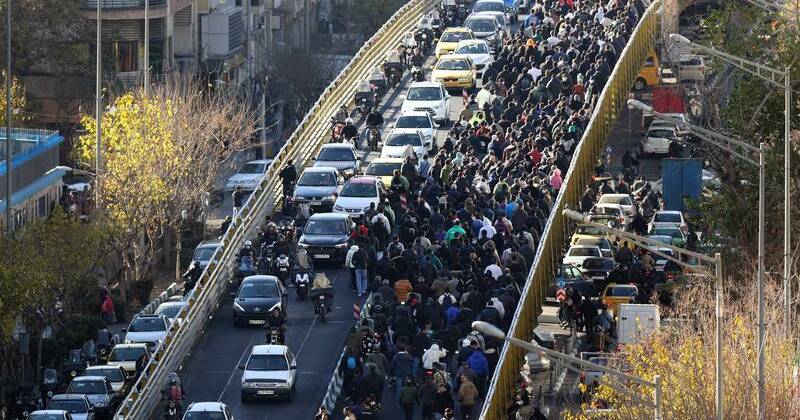
Protests have erupted across Iran following a call from exiled crown prince Reza Pahlavi for demonstrations against the government. Despite a communications blackout imposed by Iranian authorities, reports indicate that thousands took to the streets, chanting slogans against the regime and expressing support for the former monarchy. This civil unrest marks a significant escalation in protests that began on December 28, 2022, primarily over the country’s struggling economy.
Videos shared by activists, although limited due to the internet restrictions, purportedly depict protesters gathering around bonfires in Tehran and other cities. The demonstrations have reportedly led to violence, resulting in the deaths of at least 42 individuals and the detention of over 2,270 others, according to the Human Rights Activists News Agency. Iranian state media acknowledged the protests on Friday, blaming “terrorist agents” from the United States and Israel for inciting violence, though details regarding casualties remained vague.
In a brief televised address, Iran’s 86-year-old supreme leader, Ayatollah Ali Khamenei, indicated a forthcoming crackdown on demonstrators, denouncing them for “ruining their own streets to make the president of another country happy,” a clear reference to Donald Trump. The protests present a critical test for Pahlavi, whose father fled Iran just prior to the 1979 Islamic Revolution. Support for Pahlavi has resurfaced among segments of the populace, highlighting a growing discontent with the current regime.
As tensions mounted, Pahlavi called for additional protests at 20:00 local time on Friday, urging international leaders to hold the Iranian government accountable. Witnesses reported that when the clock struck 20:00 on Thursday, neighborhoods across Tehran erupted into chants of “Death to the dictator!” and “Death to the Islamic Republic!” Many demonstrators also expressed nostalgia for the shah, indicating a shift in public sentiment that could have significant implications for the country’s political landscape.
The Iranian government has faced increasing challenges in recent years, compounded by economic sanctions and a collapse of the national currency, which reached 1.4 million rials to $1 in December. As the protests unfold, the international community watches closely, particularly after Trump’s recent warnings that the U.S. would respond if Tehran “violently kills peaceful protesters.”
Pahlavi’s appeal and the subsequent protests underscore a broader dissatisfaction with the Iranian regime, demonstrating that calls for change resonate with many Iranians. As the situation evolves, the impact on the country’s governance and societal structure remains to be seen. The full extent of the protests and the government’s response will likely shape the future of political dissent in Iran.