



































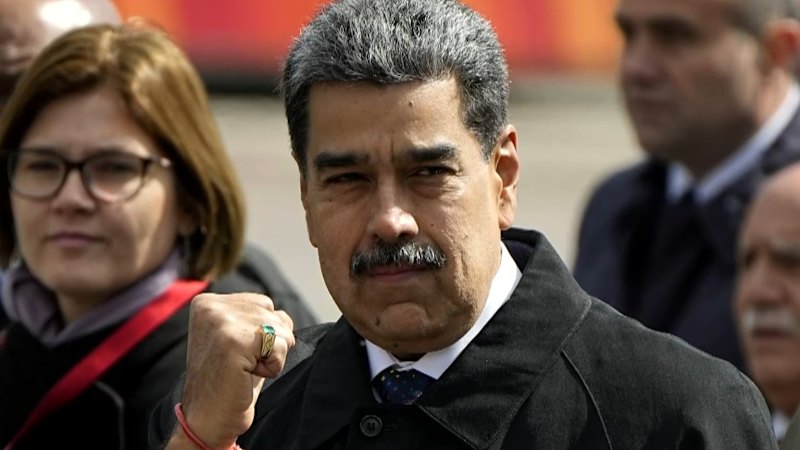
Nicolás Maduro, a former unionised bus driver, ascended to the presidency of Venezuela in 2013, succeeding the late Hugo Chávez. His tenure has been marked by significant political turmoil and economic hardship, culminating in his capture by U.S. authorities in 2020. This dramatic trajectory has not only reshaped Venezuela but has also had profound implications for international relations in Latin America.
Maduro’s early life was rooted in working-class struggles. He began his career as a bus driver in Caracas, where he became active in union activities. His political journey gained momentum as he aligned himself with Hugo Chávez, the charismatic leader who introduced a socialist agenda that transformed Venezuela. After Chávez’s death, Maduro won the presidential election in April 2013 amid allegations of electoral fraud and irregularities.
Democratic Erosion and Economic Crisis
Under Maduro’s leadership, Venezuela experienced a significant decline in democratic practices. The government cracked down on opposition parties and curtailed press freedoms. By 2016, the country faced severe economic challenges, including hyperinflation that reached an astounding 3,000%. The International Monetary Fund (IMF) reported that Venezuela’s economy contracted by more than 50% from 2013 to 2020, leading to widespread shortages of food and medicine.
As conditions worsened, millions of Venezuelans fled the country in search of better opportunities. According to the United Nations, over 5.4 million people had left by the end of 2020, creating one of the largest migration crises in Latin American history. The humanitarian situation escalated to a point where international organisations described it as a catastrophe, with severe malnutrition and health crises affecting the population.
International Response and Legal Actions
The U.S. government and various international bodies condemned Maduro’s regime for human rights violations and undemocratic actions. In March 2020, the U.S. Department of Justice announced charges against Maduro, accusing him of drug trafficking and corruption. A reward of $15 million was offered for information leading to his capture.
In April 2020, Maduro’s regime faced further scrutiny when the U.S. launched a failed military incursion in Venezuela, aiming to oust the president. The operation, dubbed “Operation Gideon,” ended in disaster, highlighting the complexities of foreign intervention in Venezuela’s internal conflicts.
On October 13, 2023, Maduro was apprehended in a high-profile operation in Caracas. His capture marked a significant moment in Venezuelan history, as it not only brought an end to his controversial presidency but also raised questions about the future of the country.
The aftermath of Maduro’s downfall remains uncertain. Analysts speculate on the potential for a transitional government and the possibility of restoring democratic processes. The situation in Venezuela continues to draw international attention, with many hoping for a resolution that addresses the dire humanitarian needs of its citizens.
As Venezuela navigates this new chapter, the legacy of Nicolás Maduro serves as a stark reminder of the complexities surrounding governance, democracy, and human rights in the region. The international community closely monitors developments, eager to see how the country will rebuild itself after years of turmoil.
