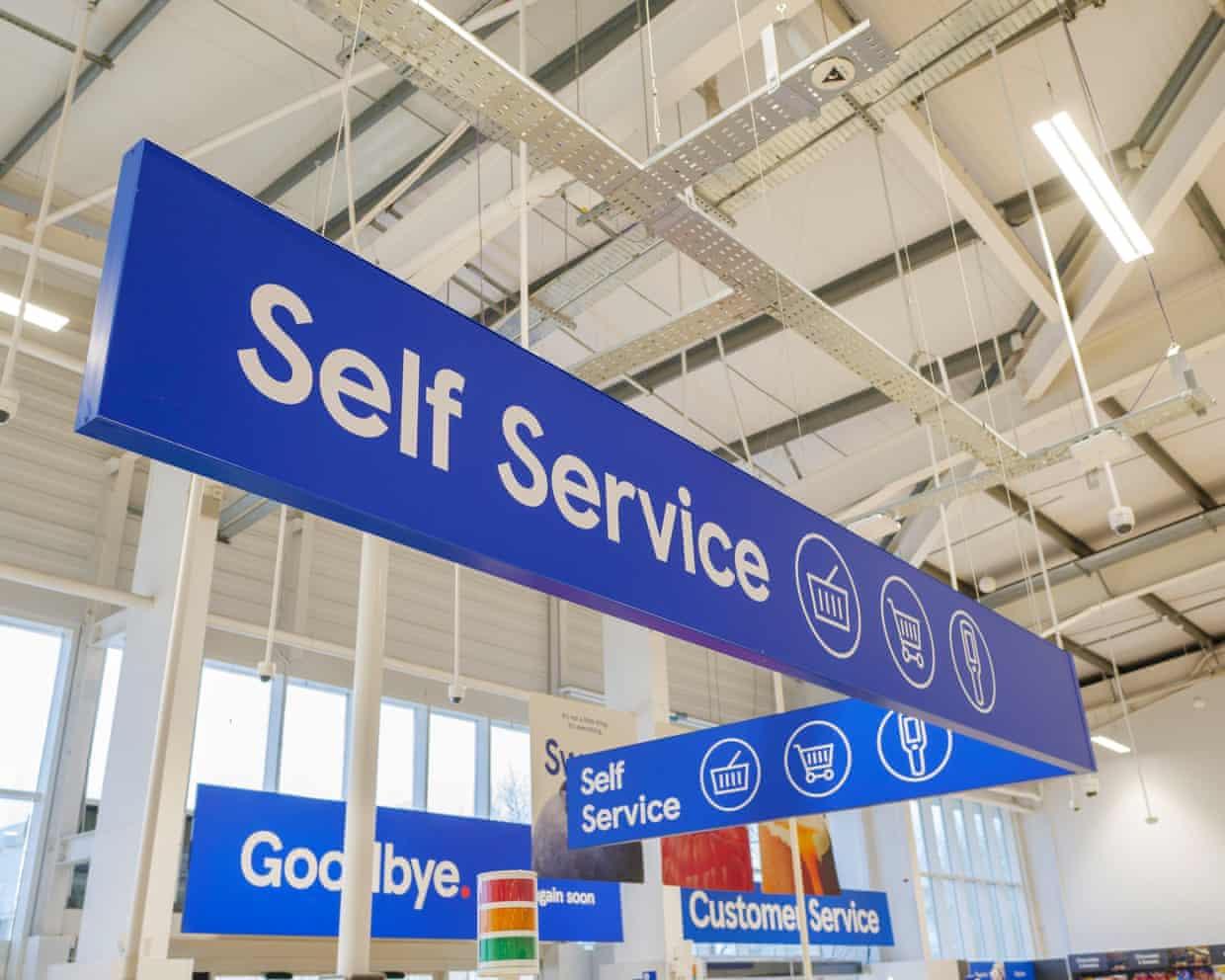
The rise of automation in the UK retail sector is reshaping the job market, prompting urgent discussions about its implications for workers and the economy. As self-service checkouts, electronic shelf labels, and AI-driven surveillance become commonplace in supermarkets, the impact of these technologies is increasingly evident. The UK’s unemployment rate has surged to its highest level in a decade, excluding the height of the Covid-19 pandemic, while economic output continues to grow at a modest pace.
With productivity gains largely attributed to a decline in low-paying jobs, particularly in retail, questions arise about who truly benefits from these advancements. The British Retail Consortium (BRC) cites a £25 billion increase in employer national insurance contributions and rising living wage requirements as key factors driving the 10% jump in employment costs for full-time entry-level retail roles. This year, the traditional hiring surge ahead of the festive season has faltered, with retail vacancies dropping by almost 6% in November, marking the lowest level in a decade, according to data from the jobs website Adzuna.
A significant aspect of this trend is the increasing adoption of automation as retailers seek to manage rising labor costs. Industry surveys reveal that investments in automation rank as the second most common response to changes in business taxation, following price increases. As a result, retail employment has plummeted by over 350,000 positions in the last decade. Young people, who typically fill these entry-level roles, find themselves disproportionately affected by this shift.
Within Labour circles, there is a recognition that raising employment costs may be necessary to address the long-standing issue of poverty-level wages. Historically, UK firms have lagged behind in investment compared to their G7 counterparts, partially due to the relative affordability of labor. However, recent changes in the economic landscape—such as increased employment costs and a decline in immigrant labor—are forcing businesses to reconsider their reliance on human workers.
Tera Allas, a professor at the Productivity Institute, emphasizes the connection between rising employment costs and the push for automation. “The higher your employment costs, regulation, and risk around hiring—the more likely you are as a business to consider options to automate,” she explains. While current data suggests the UK is only beginning to experience a turnaround, there are signs of improvement, such as a 1.5% increase in business investment in the third quarter of 2023 and a 1.1% rise in productivity compared to the previous year.
Historically, the effects of technological advancement on employment have been significant. The Industrial Revolution, for instance, saw factory owners harness steam-powered machinery, which initially benefited capitalists while leaving many workers in stagnation—a period later termed “Engel’s pause” after philosopher Friedrich Engels. Although the long-term outcome was an improvement in living standards, it was not without social upheaval and a struggle for workers’ rights.
Today, Andrew Bailey, Governor of the Bank of England, warns that the UK may face similar job displacement as seen during the Industrial Revolution. He advocates for enhanced training and education to prepare workers for the changing landscape. Allas remains hopeful, suggesting that new technologies often lead to the creation of different types of work, allowing individuals to move away from menial tasks.
Yet, the transition to a more automated workforce must be managed carefully. Workers are likely to demand support and opportunities to adapt rather than being left behind. For the Labour Party, there are significant lessons to be drawn from history. As the nation grapples with the implications of automation, the focus must remain on ensuring that the workforce is equipped for the future, rather than sidelined in a rapidly evolving economic landscape.