

































Donald Trump has initiated a legal challenge against the head of the Federal Reserve, an action that raises concerns about the potential for economic turmoil reminiscent of the Nixon administration’s controversial decisions. This move comes as inflation remains a critical issue in the United States, with the Federal Reserve grappling with how to manage interest rates effectively.
The former president’s lawsuit targets Jerome Powell, the current chair of the Federal Reserve, accusing him of overstepping his authority in managing monetary policy. As the U.S. economy continues to face challenges, including inflation rates that have surged to 6.4% as of September 2023, Trump’s legal actions may complicate the Fed’s efforts to stabilize the economy.
Comparisons to Nixon’s Era
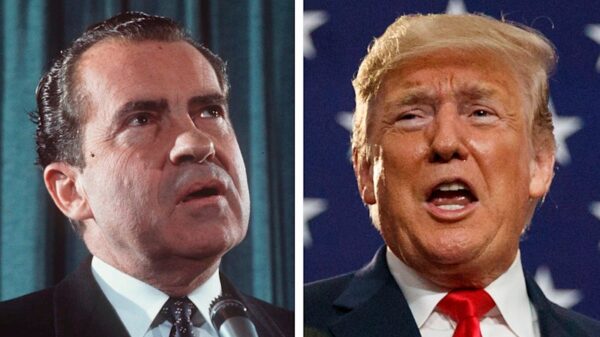
The parallels between Trump’s actions and those of Richard Nixon during his presidency are striking. In the early 1970s, Nixon attempted to influence the Federal Reserve to accommodate his administration’s fiscal policies, which ultimately led to economic instability. Historians argue that Nixon’s interference contributed to the economic challenges of the time, including rising inflation and unemployment.
Economists today worry that Trump’s lawsuit could similarly undermine the independence of the Federal Reserve, a critical institution for maintaining economic stability. The Fed has historically operated with a degree of autonomy to insulate monetary policy from political pressures. Trump’s challenge could threaten this independence, potentially leading to a loss of confidence in the Fed’s ability to manage interest rates and inflation effectively.
Implications for the Economy
The ramifications of this legal battle extend beyond the courtroom. Should Trump’s lawsuit succeed, it could set a precedent for political interference in monetary policy, which many experts believe would jeopardize the economic recovery. The Federal Reserve has indicated that it may need to implement further interest rate hikes to combat inflation, which could lead to increased borrowing costs for consumers and businesses.
In a statement released by the Federal Reserve, officials emphasized the importance of maintaining their independence. They noted that their decisions are based on economic data and aimed at promoting maximum employment and stable prices. The ongoing legal dispute may distract from these essential goals, potentially leading to a more volatile economic environment.
As the situation unfolds, both supporters and critics of Trump’s actions are closely monitoring the implications for U.S. economic policy. Analysts suggest that the outcome of this legal challenge could significantly influence public trust in the Federal Reserve, which has been under scrutiny amid rising inflation.
In summary, Trump’s confrontation with the Federal Reserve echoes the contentious relationship that characterized Nixon’s presidency. As legal battles commence, the focus remains on how this will impact economic policies and the broader financial landscape in the United States. The unfolding situation requires careful observation, as the stakes are high for both political and economic stability.