

































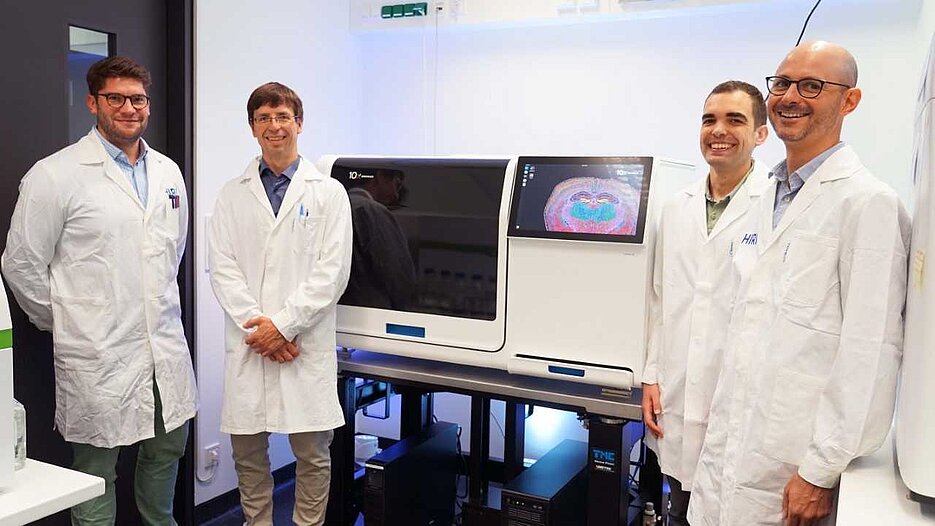
Researchers at the Julius-Maximilians-Universität (JMU) and Helmholtz Institute (HIRI) in Würzburg have developed a groundbreaking tool known as the In-Situ RNA Imaging Analyzer. This advanced technology enables the visualization of complex disease processes at the cellular level, significantly enhancing the understanding of diseases such as cancer and autoimmune disorders.
For years, scientists at the Single-Cell Center (SCC) have focused on single-cell analysis, which previously offered limited insights akin to looking through a keyhole. While researchers could observe individual cell characteristics, the spatial context—how these cells interact within their environment—was not visible. The new imaging analyzer closes this gap, allowing for a comprehensive view of cellular interactions and the roles neighboring cells play in various diseases.
Enhancing Disease Understanding
Professor Dominic Grün, Chair of Computational Biology of Spatial Biomedical Systems and Deputy Spokesperson for the Single-Cell Center, described the tool as “a powerful asset that allows us to visualize the spatial distribution of RNA molecules in cells and tissues.” This capability enables more accurate interpretations of biological processes, paving the way for potential therapeutic breakthroughs.
One immediate application of this technology is in studying the bone marrow of patients suffering from multiple myeloma, a type of bone marrow cancer. Researchers can identify the specific cells involved in the disease and examine their molecular interactions, which are crucial for understanding disease progression and tissue regeneration post-treatment.
Another significant area of investigation is the repair process following a heart attack. After such an event, scar tissue forms, impairing the heart’s pumping capacity and potentially leading to heart failure. The new imaging technology will help researchers understand how different cell types collaborate in healing heart tissue, which could inform future treatment options.
Collaborative Research and Future Implications
The Single-Cell Center in Würzburg serves as a joint competence center that combines expertise from the Helmholtz Institute for RNA-based Infection Research (HIRI), the Faculty of Medicine at JMU, the University Hospital Würzburg (UKW), and the Max Planck Research Group at the Würzburg Institute of Systems Immunology (WuSI).
This multidisciplinary collaboration enhances the research output, as experts utilize machine learning and artificial intelligence to analyze the vast amounts of data generated. Professor Antoine-Emmanuel Saliba, spokesperson for the Single-Cell Center, highlighted the strategic importance of this investment, stating, “Würzburg is positioning itself as a pioneer in single-cell research.”
The insights gained from the In-Situ RNA Imaging Analyzer have the potential to transform our understanding of disease mechanisms and improve diagnostic and therapeutic approaches. With continued research, this innovative technology will play a critical role in addressing complex health challenges in the future.
The Helmholtz Institute for RNA-based Infection Research is notable for being the first institution globally to merge RNA research with infection biology. Its foundational goal is to develop innovative therapies to enhance the diagnosis and treatment of human infections, marking a significant step in medical research at the Würzburg Medical Campus.
As the project progresses, the teams led by Professors Grün and Saliba are committed to refining the analytical algorithms that will maximize the utility of this advanced imaging technology, ensuring its effectiveness in clinical research and application.