
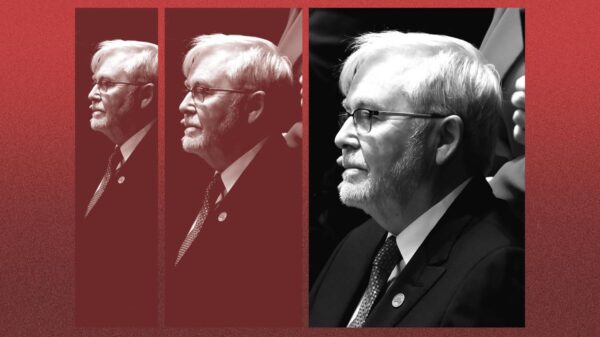














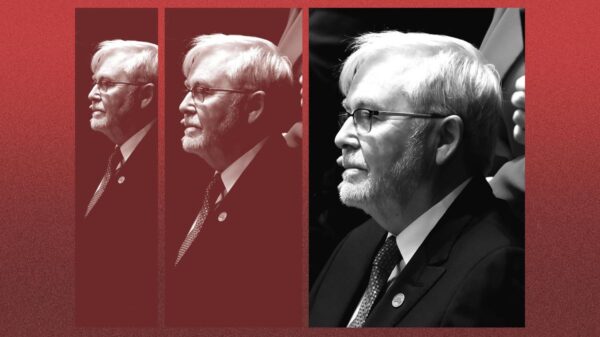








BREAKING: Kevin Rudd has officially announced his departure from the Australian ambassador’s residence in Washington DC, marking a significant transition as he returns to lead the Asia Society in New York. This urgent move comes amidst lingering tensions with former US President Donald Trump, whose administration Rudd faced with both criticism and resilience.
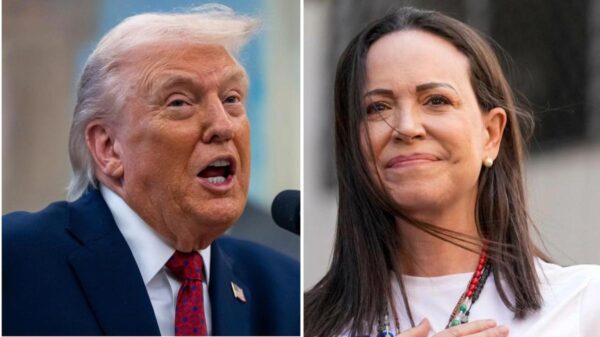
As Rudd prepares to leave his post, reflections on his tenure reveal a crucial narrative: it could have been much worse. Many anticipated that Trump’s return to the presidency would jeopardize Rudd’s ambassadorship. Known for his outspoken critiques, Rudd labeled Trump as “the most destructive president in history” and a “traitor to the West.” Despite these harsh words, Rudd managed to navigate a complex diplomatic landscape, even enduring a tense encounter where Trump bluntly stated, “I don’t like you either, and I probably never will.”
The impact of Rudd’s departure is profound. Australia has struggled to leverage its historically strong relationship with the US under Trump’s contentious trade policies. Most Australian exports have been subjected to a 10 percent baseline levy known as “liberation day,” yet paradoxically, some local exporters have gained an edge under the current tariff regime.
The timing of Rudd’s exit raises questions. With less than a year remaining in Trump’s presidency, why not stay and weather the storm? Prime Minister Anthony Albanese stated that Rudd’s choice to return to the Asia Society was entirely his own, yet there is speculation that Albanese opted not to persuade Rudd to remain, indicating a strategic recognition that fresh leadership might better serve national interests.
Who will fill Rudd’s shoes? Former Labor frontbenchers Joel Fitzgibbon, Stephen Conroy, and Greg Combet are reportedly among the frontrunners. However, Conroy’s previous comments about Trump, labeling him “moronically stupid,” may jeopardize his candidacy. The next ambassador will need not only diplomatic tact but also a keen understanding of the intricacies of US-Australia relations.
As Rudd steps away from the realm of formal diplomacy, many anticipate a more candid expression of his views on the critical US-Australia relationship. His departure signifies not just a personal transition but a pivotal moment for Australia as it seeks to redefine its diplomatic strategy with a changing global landscape.
Stay tuned for updates on who will succeed Rudd and how this transition will affect Australia’s international relations.