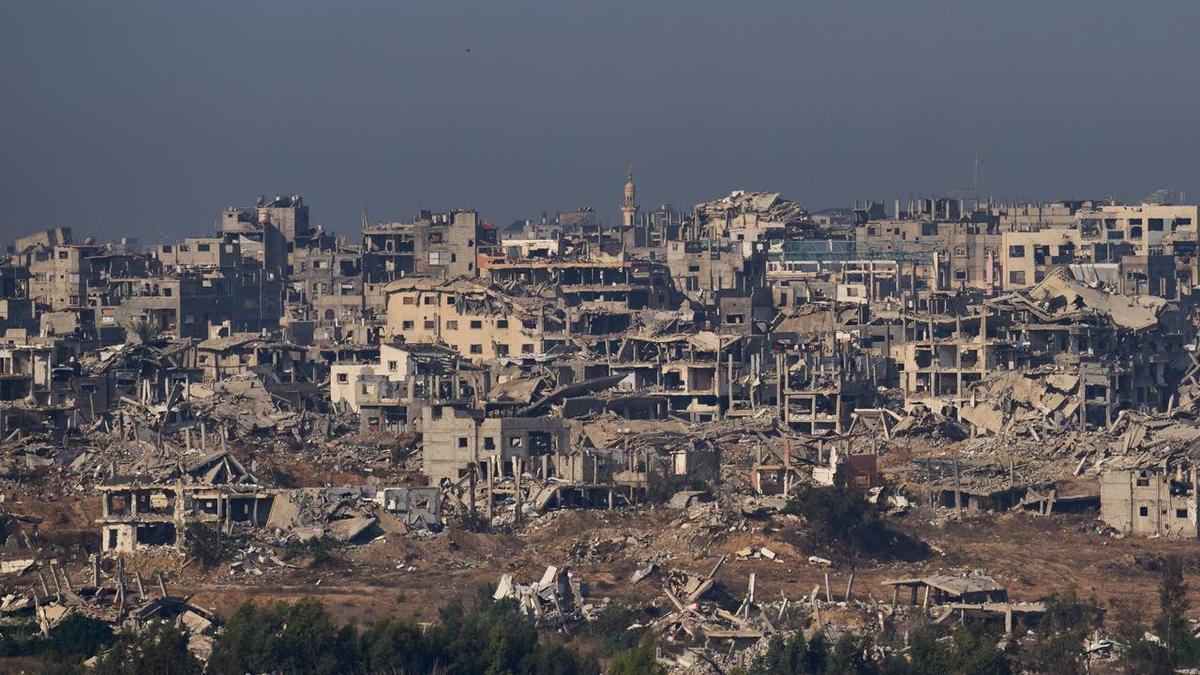
BREAKING: The United Nations has just approved a controversial plan for Gaza, prompting immediate reactions from Israeli and Palestinian leaders. Israeli Prime Minister Benjamin Netanyahu praised the resolution, while Hamas denounced it as a tool of foreign control.
The UN Security Council passed the resolution on Monday, authorizing an international stabilisation force aimed at providing security in war-ravaged Gaza. This plan, largely influenced by the Trump administration, envisions a transitional authority known as the Board of Peace, which will be overseen by President Trump himself. The resolution includes provisions for the demilitarisation of Gaza and aims to foster a potential path towards an independent Palestinian state.
Netanyahu’s office declared on X (formerly Twitter) that “President Trump’s plan will lead to peace and prosperity” by insisting on full disarmament of Gaza. The international force will have a wide mandate, including overseeing Gaza’s borders and ensuring the permanent decommissioning of weapons from non-state armed groups. Notably, this mandate allows for the use of military force in compliance with international law, a detail that raises significant concerns.
Hamas reacted swiftly, stating that the force’s disarmament mandate compromises its neutrality, effectively making it a party to the conflict. A spokesperson emphasized that the resolution fails to meet the “political and humanitarian demands of our Palestinian people.” Hamas is demanding any international force operate solely under UN supervision and restrict itself to monitoring the ceasefire at Gaza’s borders.
The Palestinian Authority (PA) expressed its readiness to implement the resolution immediately and pledged cooperation with the US, UN, and other international partners. However, many Palestinians view the PA as weak, perceiving its security coordination with Israel as a form of collaboration with the occupation.
The UN’s decision followed intense negotiations where Arab nations and Palestinian representatives urged the US to strengthen language regarding Palestinian self-determination. The current proposal does not provide a clear timeline or guarantees for an independent state, merely stating that conditions may be created for self-determination after reconstruction and reform efforts.
The resolution’s passage is seen as crucial to maintaining the fragile ceasefire in Gaza, following a devastating conflict that began with Hamas’s surprise attack on October 7, 2023, which resulted in approximately 1,200 Israeli casualties. In response, Israeli military actions have reportedly claimed over 69,000 Palestinian lives, according to the Gaza health ministry.
This vote also received essential backing from key Arab and Muslim nations, including Indonesia, Turkey, and Saudi Arabia, who have expressed their commitment to a two-state solution, a stance that Netanyahu has opposed. The Turkish government has indicated readiness to contribute to the international force, despite potential Israeli objections.
As the situation unfolds, the international community is closely monitoring the implications of this resolution. The authorization for both the transitional authority and international force will expire at the end of 2027, setting a critical timeline for implementation and further developments in this ongoing crisis.
The eyes of the world remain fixed on Gaza as tensions continue to escalate, raising urgent questions about the region’s future and the prospects for peace. Stay tuned for updates as this story develops.