



































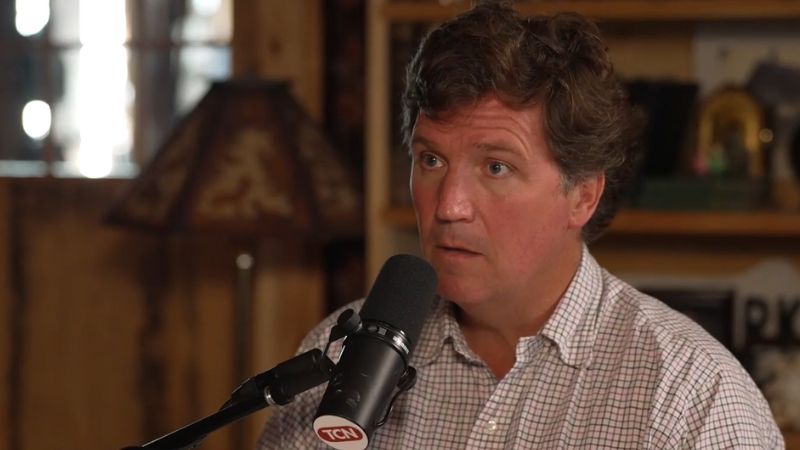
Former Fox News presenter Tucker Carlson has sparked controversy with his assertion that the recent U.S. incursion into Venezuela is tied to a global agenda promoting homosexual rights. This claim follows the U.S. government’s actions this week, which included capturing Venezuelan dictator Nicolás Maduro and announcing plans to manage the country’s oil industry.
In a video posted online, Carlson questioned the motivations behind the U.S. intervention, suggesting it could be linked to promoting same-sex marriage in Venezuela. “Are we carrying out regime change in Venezuela in the name of gay marriage? It seems that way,” he stated, casting doubt on the notion that democracy was the primary reason for the U.S. actions. He further remarked, “We’re not going to go kill Nicolás Maduro because we don’t like the way he’s treating his people,” implying an alternative motive related to LGBTQ+ rights.
Carlson’s use of the term “global homo” to describe this supposed agenda aligns with conspiracy theories often espoused by far-right movements. The phrase suggests that there is a coordinated global effort to advance gay rights, a narrative frequently rejected by mainstream political discourse.
Despite the provocative nature of his claims, Carlson later removed the video from his platform. The Trump administration’s official line indicates that Vice President Delcy Rodríguez will likely take control of Venezuela following Maduro’s removal. The political landscape in Venezuela is complex, with opposition leader María Corina Machado, currently in exile, also opposing same-sex marriage, as does Edmundo González, who ran against Maduro in the last election.
This is not the first time Carlson has made headlines regarding LGBTQ+ topics. In a previous incident, he questioned the authenticity of former U.S. Secretary of Transportation Pete Buttigieg‘s sexuality, challenging him to prove his identity, a request Buttigieg declined.
The implications of Carlson’s comments highlight the intersection of politics and social issues, raising questions about the narratives used to justify international intervention. While U.S. foreign policy continues to evolve, the motivations behind actions in Venezuela remain a point of contention among analysts and commentators.
