



































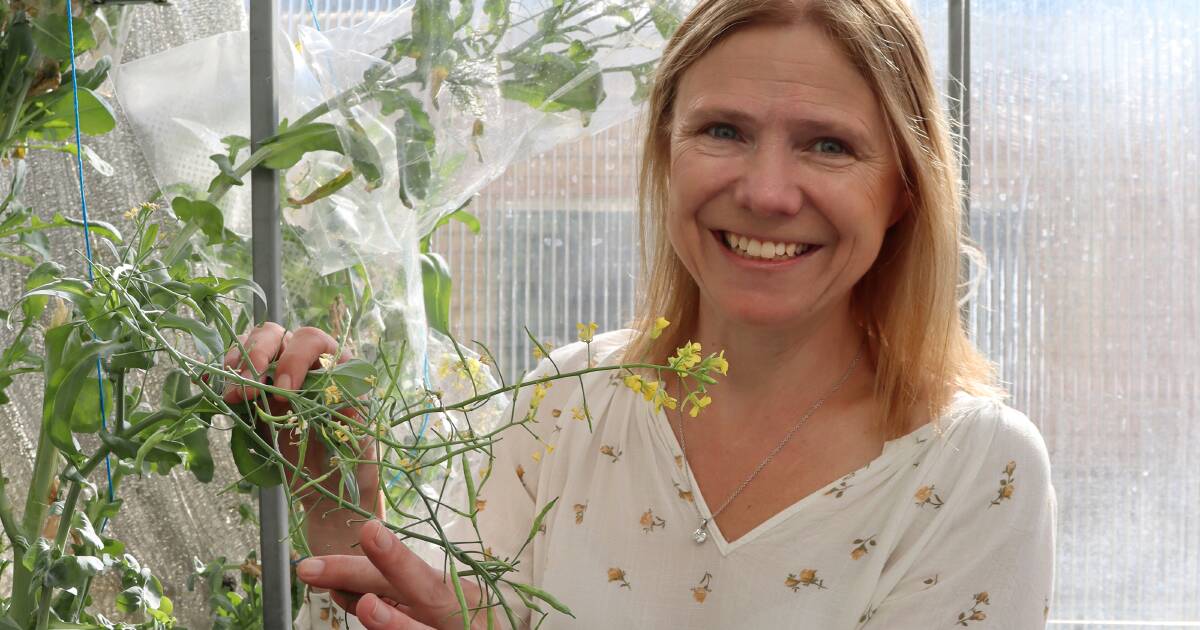
Professor Jacqueline Batley, a prominent canola researcher, has been named the Western Australia Scientist of the Year for 2025 at this month’s Premier’s Science Awards. Recognized for her significant contributions to agricultural science, she emphasized the importance of collaboration in achieving groundbreaking research.
A Journey Rooted in Passion for Science
Professor Batley believes that effective teamwork is essential for scientific success. “Having a good team in place allows you to undertake world-leading research,” she stated during the awards ceremony. Originating from the countryside of the United Kingdom, Batley grew up with a keen interest in horticulture, influenced by her father, who was a plant breeder.
She pursued a biology degree at the University of Bristol, focusing on genetics. Her early experiences included working on field trials during her summer breaks, which further solidified her passion for plant sciences. Batley’s PhD research investigated the population structure of insect pests affecting willow trees, particularly at a time when interest in biofuels was rising.
After completing her PhD, Batley relocated to Melbourne in 2002 to join the Department of Primary Industries (DPI). It was here that she began her extensive research on canola, particularly concerning the devastating disease known as blackleg, caused by the fungus Leptosphaeria maculans.
Focus on Blackleg Disease and Canola Research
Blackleg is the most significant disease affecting canola crops in Australia, causing substantial damage by infecting young plants early in the growing season. Professor Batley noted that the disease had become a growing concern as farming practices evolved, leading to increased risks due to changes in crop rotation and planting schedules.
“Blackleg was then – and still is – the biggest disease impacting canola across Australia,” Batley explained. “Common losses can vary from 10 percent to complete crop failure when resistance breaks down.” Her research at DPI Victoria, alongside teams from the University of Queensland and the University of Western Australia (UWA), focused on identifying genes that confer resistance to blackleg.
Currently, Batley leads a research group at UWA’s School of Biological Sciences, concentrating on disease resistance in crops, particularly brassicas like canola. Her team is exploring innovative methods to break resistance and develop sustainable control measures for blackleg. “We are now looking at understanding the relationships between the host and the fungus causing blackleg to establish more sustainable control methods for this disease,” she noted.
Batley’s research achievements include identifying genes associated with blackleg resistance, which has facilitated the development of new canola varieties that enhance productivity and yield stability. Her work extends beyond brassicas, applying similar technologies to other crops, including wheat and chickpeas.
The field of plant-pathogen interactions has rapidly evolved, leading to new strategies for crop protection. Batley utilizes next-generation sequencing technologies to analyze gene diversity and evolution in various brassica species, enabling her to link genetic traits to disease resistance.
Looking forward, Batley is initiating research into novel approaches for insect resistance in canola, particularly in light of potential insecticide bans. “We want Australian growers to be on the front foot if there are similar moves here,” she stated, highlighting innovative strategies such as modifying leaf hairiness to deter insect feeding.
Professor Batley expressed enthusiasm for the future of agricultural research, acknowledging the ongoing challenges posed by nature. Winning the top award at the Premier’s Science Awards not only recognizes her dedication but also inspires her to mentor the next generation of agricultural scientists. “I want them to see they can fulfill their goals in the agricultural space,” she concluded.
