




























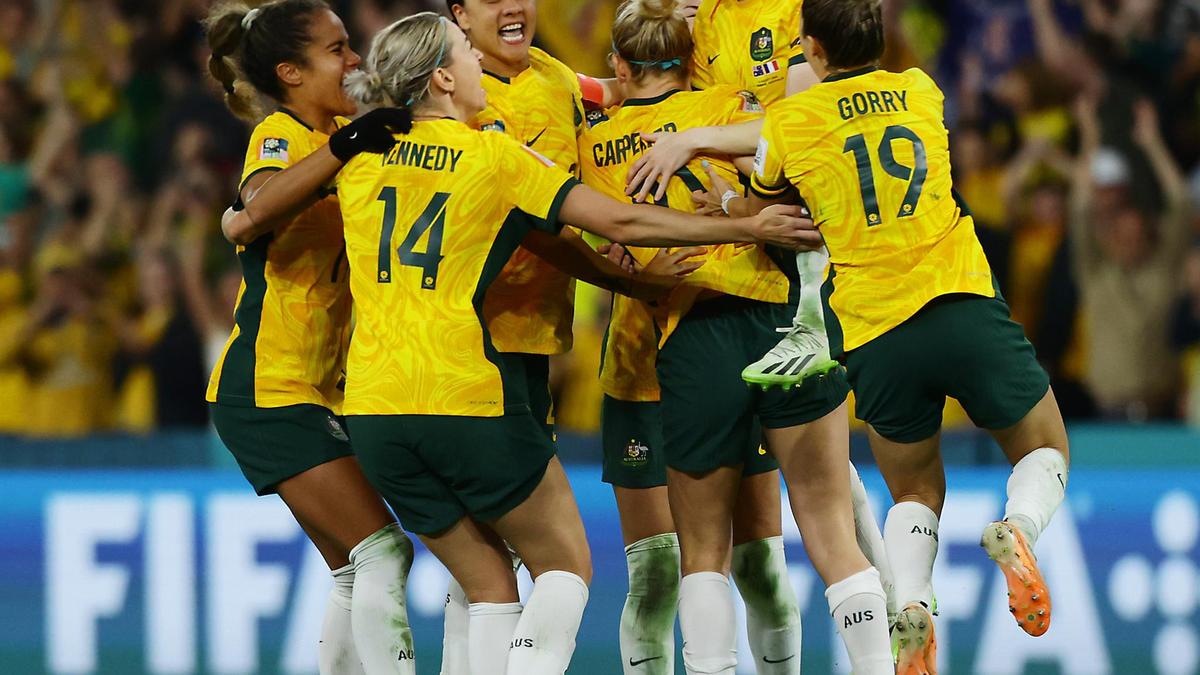
UPDATE: The urgent need for increased investment in women’s sports across Australia has been underscored following the record-breaking success of the Matildas in the FIFA Women’s World Cup. As the team captivated nearly two billion viewers worldwide, experts warn that significant challenges remain for female athletes in the country.
Despite the iconic moments from the tournament on home soil, startling statistics reveal that girls drop out of sports at twice the rate of boys by age 14, according to UN Women Australia. Factors such as social expectations and lack of funding contribute to this alarming trend, creating barriers for young female athletes.
While the Women’s World Cup awarded $150 million in prize money, this is only about one-third of the $440 million awarded to men during the 2022 Qatar tournament. Samantha D’Souza, Board Director of Women’s Sport Australia, stated, “Despite global recognition of brilliant female athletes, our community still struggles with pay gaps and bias. The stigmas surrounding women’s sports persist.”
D’Souza highlighted the decline of the A-League women’s competition, where many athletes earn some of the lowest salaries in professional Australian sports. “If this is the situation at home, how can we expect young girls to envision a future in sports?” she questioned.
The post-COVID resurgence of women’s events like the UEFA Women’s EURO and the Women’s Rugby World Cup provides a glimmer of hope, as these competitions have set new attendance records and showcased female talent. However, D’Souza insists that more action is necessary.
She urges a complete redesign of sports programs tailored for girls, rather than retrofitting existing systems that weren’t built for them. “This complex process must start at a national level, utilizing detailed inclusion guides from the ASC, and extend through clubs and schools to grassroots initiatives,” she explained.
D’Souza also emphasizes the need for ongoing government support, particularly for organizations like the Office for Women and Girls in Victoria, which faced defunding in 2025. On the commercial side, she calls for brands to support storytelling that elevates female athletes and provides relatable role models for young girls.
As Australia prepares for major sporting events like the 2026 Winter Olympics and the AFC Women’s Asian Cup on home soil, there is a critical opportunity for transformation. While strides have been made in women’s sports, experts agree that sustained investment and commitment are essential for meaningful change.
With the future of female athletics hanging in the balance, the message is clear: action is vital, and it must happen now. As the discussion continues, it is crucial for stakeholders to prioritize women’s sports to inspire the next generation of female athletes. Share this message to amplify the call for change!