



























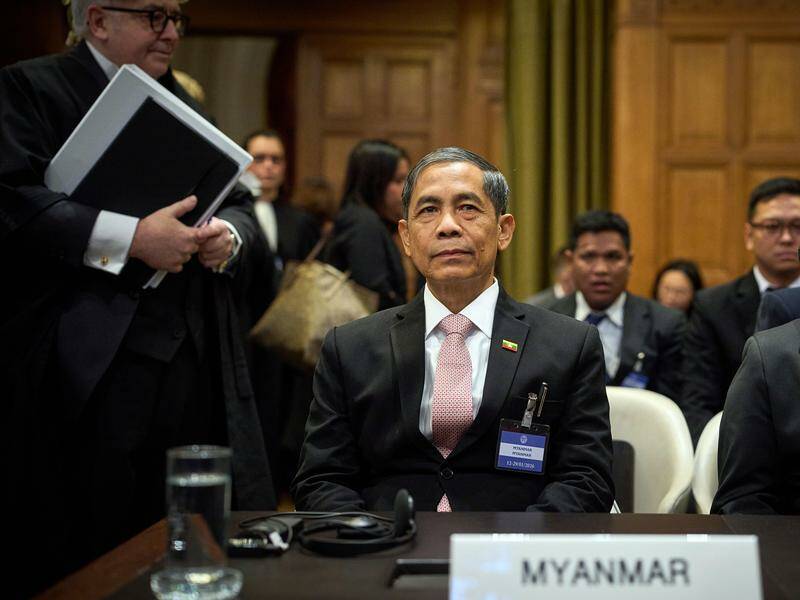
Myanmar has firmly rejected accusations of genocide against the Rohingya minority during a hearing at the International Court of Justice (ICJ). The case, brought by Gambia in 2019, alleges that Myanmar’s government has systematically targeted the Rohingya population, a claim that Myanmar officials contest.
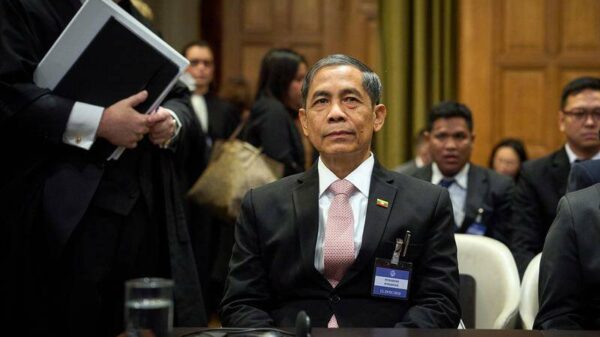
During the proceedings, held on October 9, 2023, Myanmar’s representative, Ko Ko Hlaing, stated that Gambia did not meet its burden of proof regarding the allegations of genocide. “This case will be decided on proven fact, not unsubstantiated allegations,” he asserted. Gambia, a predominantly Muslim nation, claims that Myanmar’s military campaign, which began in 2017, resulted in the forced displacement of over 730,000 Rohingya into neighbouring Bangladesh, where many reported experiences of violence, including killings and mass rape.
The UN’s fact-finding mission has characterized the military’s actions as involving “genocidal acts.” However, Myanmar maintains that its military operations were a legitimate response to terrorist attacks carried out by Rohingya militants. Ko Ko Hlaing dismissed the mission’s findings, describing them as lacking objectivity and reliability.
Gambia’s legal team argued that the scale and nature of the military’s actions against the Rohingya community, including the destruction of villages, could not be justified solely as counter-terrorism measures. They contended that the evidence presented demonstrates the necessary genocidal intent.
Myanmar has long viewed the Rohingya as “Bengalis” from Bangladesh, despite their presence in the country for generations. This perspective has contributed to the Rohingya’s statelessness, as they have been denied citizenship since 1982.
Ko Ko Hlaing emphasized Myanmar’s commitment to repatriating and resettling Rohingya refugees, stating that external factors such as the COVID-19 pandemic, natural disasters, and political instability had hindered these efforts. He remarked, “Myanmar’s commitment and constant efforts since 2017 contradict Gambia’s narrative that Myanmar’s intention is to destroy or forcibly deport this population.”
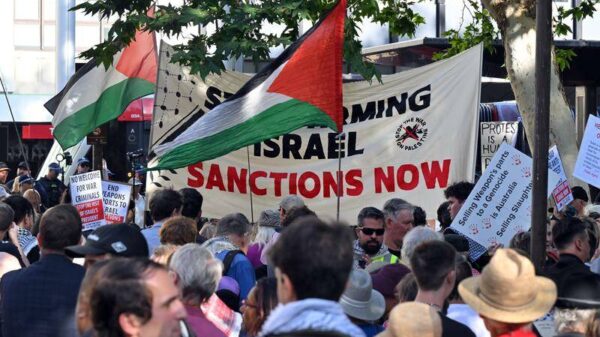
The ICJ, the United Nations’ highest court for disputes between states, is hearing this case with backing from the Organisation of Islamic Cooperation (OIC). This represents the first genocide case fully examined by the ICJ in over a decade, with a final ruling anticipated in late 2026. The outcome may also influence other ongoing cases, such as South Africa’s allegations of genocide against Israel related to the conflict in the Gaza Strip.
The political climate in Myanmar has been tumultuous since the military coup in February 2021, which overthrew the elected government and led to widespread protests. The military’s response has included severe crackdowns on dissent and has created a new wave of conflict within the country.
As the hearings continue over the next three weeks, the court will hear directly from Rohingya victims in closed sessions, marking the first opportunity for these individuals to present their testimonies to an international court. This development highlights the ongoing struggle for justice and recognition faced by the Rohingya population.