



































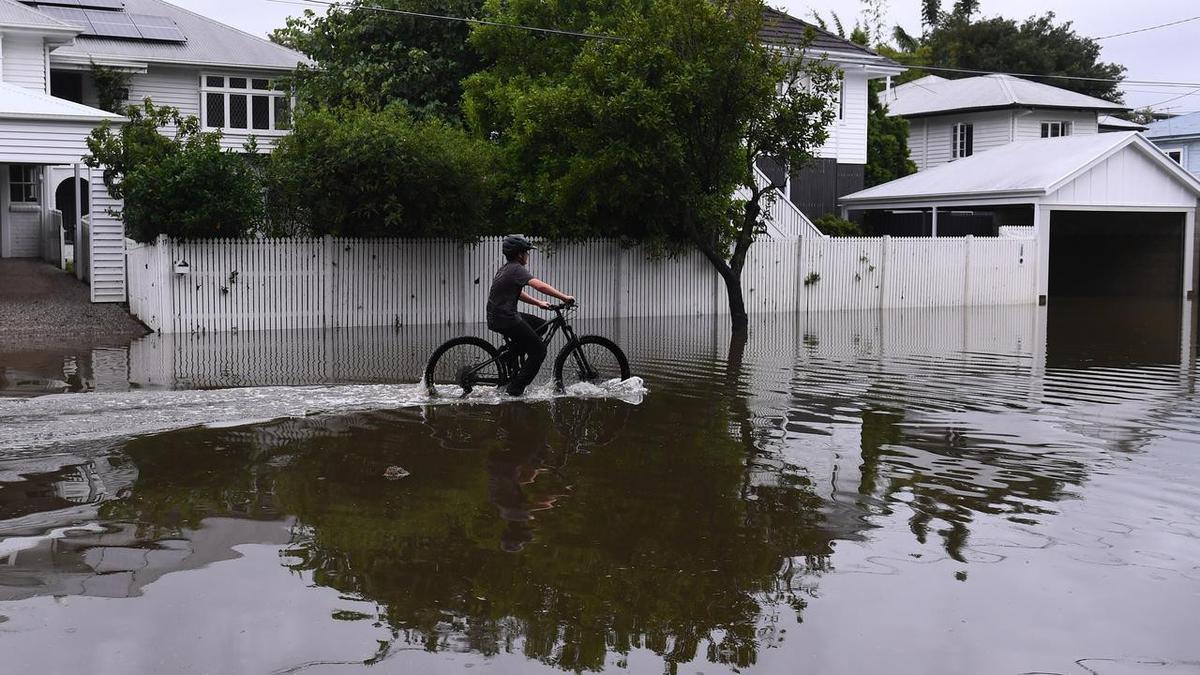
Australia’s ex-tropical cyclone Alfred has been identified as one of the world’s most expensive climate-related disasters of 2025. Economic losses from the storm, which struck southeast Queensland and northern New South Wales, are estimated at approximately $US1.2 billion (around $A1.8 billion). This information comes from a report by the UK-based humanitarian organization Christian Aid, which highlights the financial impact of climate change on global communities.
The report details that the ten most economically devastating climate events recorded total over $US120 billion in damages, with each incident incurring losses exceeding $US1 billion. The most significant event linked to human-induced climate change was the Palisade and Eaton wildfires in suburban Los Angeles in January, which caused damage estimated at over $US60 billion.
Other notable disasters include severe cyclones that occurred in November, leading to catastrophic flooding and landslides across Thailand, Indonesia, Sri Lanka, Vietnam, and Malaysia. These tropical storms and the extreme monsoon system are believed to have incurred costs around $US25 billion, making it the second most expensive event of the year. Tragically, this flooding disaster also resulted in more than 1,750 lives lost, marking it as one of 2025’s deadliest climate events.
Understanding the Economic Toll of Climate Change
Christian Aid conducts an annual assessment of extreme weather events, aiming to highlight both the economic and human impacts of climate change. The organization bases its calculations on data from insurance company Aon, which primarily focuses on insured losses, often overlooking the broader costs associated with lost income, environmental damage, and human displacement. The accumulating research linking greenhouse gas emissions to specific weather phenomena has been integral to this year’s findings.
Following the impact of ex-tropical cyclone Alfred, ClimaMeter’s “rapid attribution study” indicated that the storm produced significantly more rainfall due to human-induced climate change. Initially classified as a category four tropical cyclone, Alfred was downgraded prior to landfall but still posed a significant threat to densely populated areas. Its intensity and rainfall patterns were largely attributed to above-average ocean temperatures.
Researchers noted that Alfred tracked unusually far south, raising concerns that warmer ocean conditions could enable storms to enter new regions, potentially affecting communities unprepared for such events. While scientists generally predict fewer cyclones in a warming climate, they also anticipate that the storms that do develop will be increasingly severe.
The Broader Implications for Global Communities
Davide Faranda, research director at the Laboratoire de Science du Climat et de l’Environnement, emphasized that these recorded disasters are not isolated occurrences. He remarked, “They are the predictable outcome of a warmer atmosphere and hotter oceans, driven by decades of fossil fuel emissions.”
The economic consequences of climate disasters tend to disproportionately affect wealthier nations, where higher property values and better insurance coverage lead to greater reported losses. Conversely, poorer countries often suffer more significantly from climate extremes, as they lack the resources necessary to effectively respond.
Patrick Watt, chief executive officer of Christian Aid, underscored the pressing need for adaptation efforts, particularly in the Global South, where communities face the brunt of climate impacts. “The poorest communities are first and worst affected,” he stated, calling for urgent action to support these vulnerable populations.
As the frequency and intensity of climate-related disasters continue to escalate, it becomes increasingly essential to address the underlying factors driving these changes and to bolster resilience in the most affected regions.
