

















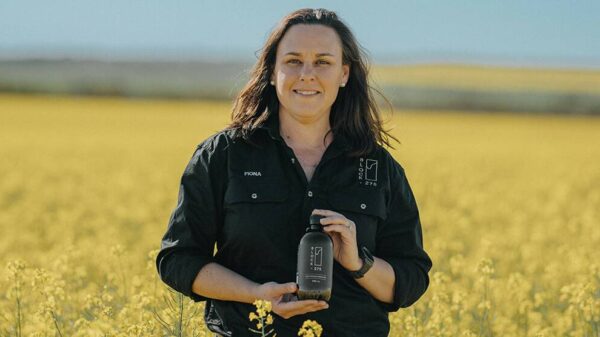















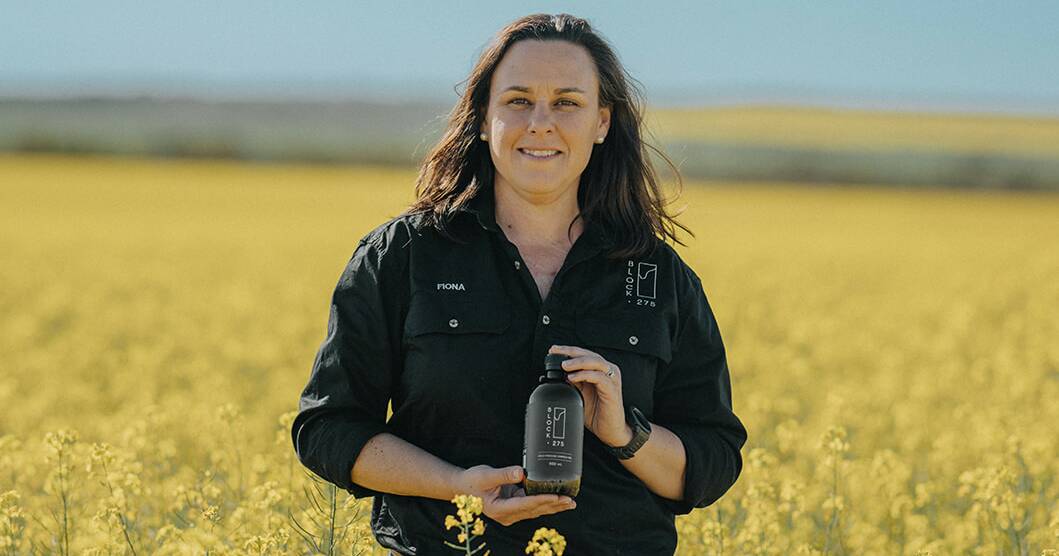
A family in Western Australia is turning their canola crop into a premium oil brand despite the challenges of operating from a remote location. Fiona Mann, who previously worked as an agronomist, and her husband, Liam Mann, launched their brand, BLOCK 275, in 2020, focusing on producing high-quality cold-pressed canola oil.
The Manns lease a 678-hectare property called Midoxgate from Fiona’s parents. They began their farming journey with no machinery or infrastructure. “We had to start from scratch,” Fiona Mann explained. They established Mann Farming Co. to manage both their farming and contracting operations, seeking ways to mitigate seasonal risks that could impact their income.
Recognizing the need to add value to their canola, the Manns imported machinery for oil production in 2017. However, financial constraints delayed its use until they were ready to launch their premium oil product. They grow non-genetically-modified (non-GM) Trophy canola, which they use to create their distinctive oil. This product, unlike typical commercial oils, undergoes minimal processing: “We don’t do any of that processing,” Mann stated. “It is literally pressed, filtered and packaged.”
The Manns have committed to maintaining non-GM production despite challenges in the market. “We actually take a hit up in Geraldton in the Northern Ag region because there’s literally only a few of us that grow non-GM,” she noted. This choice stems from consumer demand for non-GM products, even though they do not receive a premium price compared to GM crops.
Their production process is entirely on-farm, which allows for complete control over the quality. “We press around 800 litres at a time,” Mann explained, detailing how the oil is filtered and stored in stainless steel vats until ready for packaging. Their commitment to quality requires constant attention, especially during pressing, which demands checks every three hours.
Currently, their oil is available at local IGA stores in Geraldton and select locations in Perth, but they have found a more lucrative market by supplying directly to chefs and restaurants, such as Gibney Cottesloe and Mandoon Estate. “They value local produce, they value a high-quality product,” Mann said, emphasizing the importance of their partnerships in the culinary community.
Looking ahead, the Manns aim to expand their brand’s reach, with aspirations to move into interstate markets. “We’re looking at going potentially interstate,” Mann revealed. They believe there is significant demand for their product in the Eastern States but recognize that freight costs pose a challenge.
Additionally, they are exploring international export opportunities, particularly in markets like Singapore. “Our product is very different here,” Mann noted, highlighting its vibrant colour and unique nutty flavour. To increase brand awareness, they plan to participate in trade shows and leverage connections through the AgriFutures Rural Women’s Award.
Mann is eager to share their story and inspire others in rural areas to pursue entrepreneurship. “If more people can do small businesses in the bush, it brings that resilience to the community,” she said. They hope to grow their business to the point where all their canola is converted into oil, which would create local jobs and support community development.
Through their determination and innovative approach, the Manns are setting an example of how regional businesses can thrive in today’s market, showcasing that location is not a barrier to success.